

Weekly Forex Market Roundup: Global News (September 1 – September 4, 2025)
Weekly Forex Market Roundup
Introduction
Traders kicked off September 2025 with cautious optimism as global markets navigated a mix of economic data releases, central bank signals, and geopolitical tensions. The forex landscape saw the US dollar (USD) extend its weakening trend amid heightened expectations for Federal Reserve (Fed) rate cuts, while the euro (EUR) and British pound (GBP) gained ground. Key events included softer US manufacturing data, stabilizing Chinese PMIs, and Eurozone inflation hitting the European Central Bank’s (ECB) target. Volatility remained moderate due to Labor Day closures in the US and Canada on September 1, but upcoming labor reports promised to shake things up. This roundup analyzes the week’s highlights, providing actionable insights for global market participants.
Key Economic Indicators Driving the Market
Economic data releases set the tone early in the week, influencing currency valuations and trader sentiment.
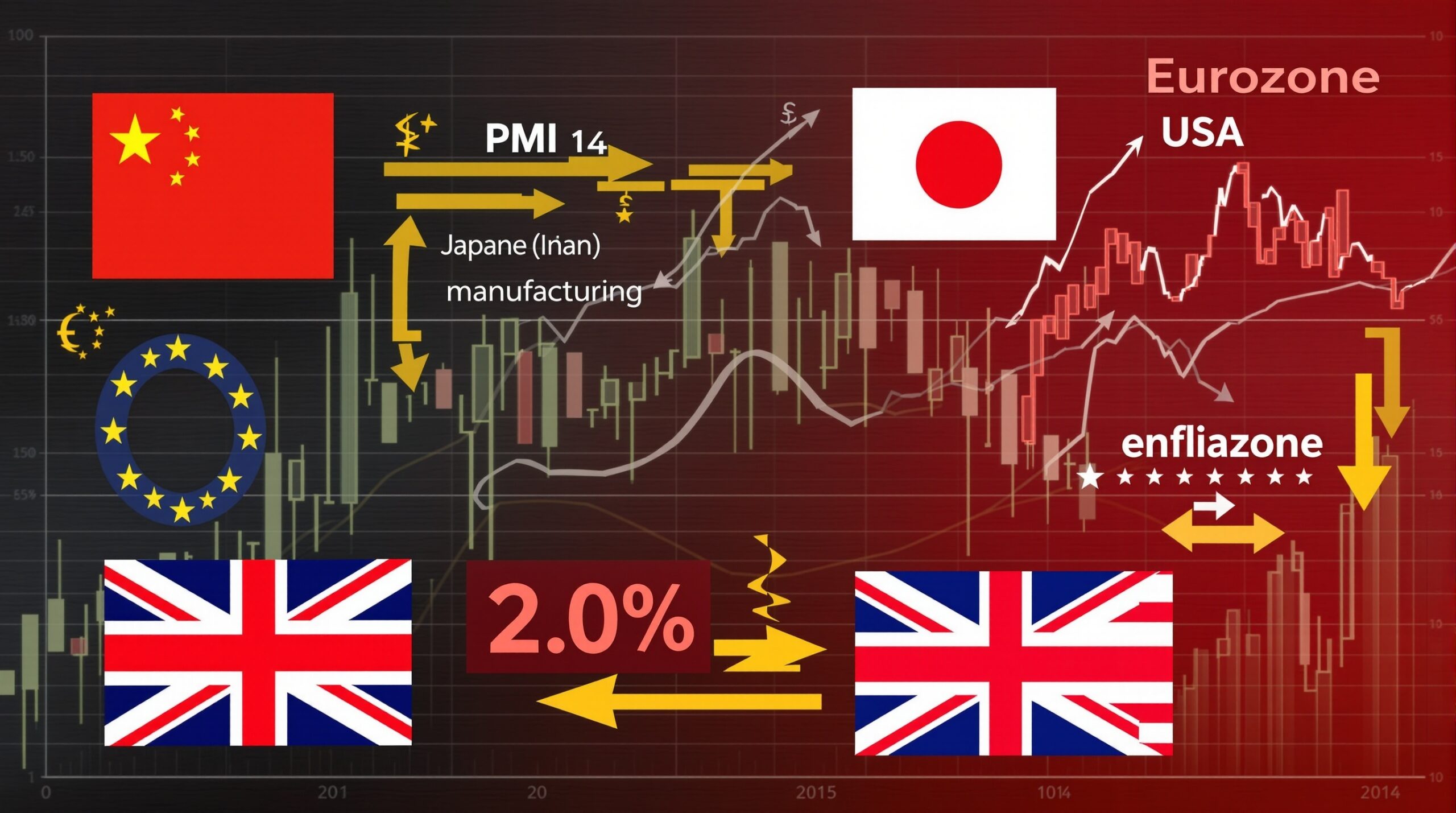
China’s manufacturing sector showed signs of stabilization, with the NBS Manufacturing PMI rising to 49.4 in August—slightly above the 49.3 prior reading but still below the 50 expansion threshold. The Non-Manufacturing PMI climbed to 50.3, signaling modest growth in services. These figures bolstered the Australian dollar (AUD) and other commodity-linked currencies, as China remains a major export destination. Meanwhile, Japan’s S&P Global Manufacturing PMI finalized at 49.7, reflecting ongoing contraction but with capital spending up 7.6% year-over-year, supporting yen (JPY) strength.
In Europe, Eurozone inflation cooled to 2.0% year-over-year, aligning with the ECB’s target and reducing pressure for further rate adjustments. This development propelled EUR/USD higher, as markets priced in a steady ECB policy. The UK’s S&P Global Manufacturing PMI held at 52.9, indicating expansion, while Australia’s equivalent rose to 53.0—its highest in months—fueled by robust domestic demand.
Across the Atlantic, US ISM Manufacturing PMI edged up to 48.7 but remained in contraction territory, underscoring labor market concerns ahead of non-farm payrolls (NFP). JOLTS job openings data, due later in the week, were anticipated to drop to around 7.24 million, further pressuring the USD. These indicators highlighted a softening US economy, prompting traders to bet on Fed easing.
For more detailed economic calendars, visit FXStreet’s Economic Calendar.

Central Bank Updates and Policy Shifts
Central banks dominated headlines, with the Fed’s Jackson Hole symposium aftermath lingering into September.
Fed Chair Jerome Powell signaled readiness for rate cuts, with markets pricing in a 25-basis-point reduction at the September 17 meeting. Economists polled by Reuters expect no further ECB cuts, citing a steady economic outlook after 200 basis points of easing since last year. The Bank of Japan (BoJ) maintained optimism, with yen appreciation tied to potential policy normalization.
The People’s Bank of China (PBoC) hinted at 30 basis points of cuts by year-end, amid tariff uncertainties and AI-driven growth initiatives. These moves supported emerging market currencies, as traders eyed reduced global policy divergence.
New York Fed President John C. Williams emphasized data-driven decisions in his September 4 speech, reinforcing market bets on easing. For in-depth analysis, check MUFG’s Monthly Foreign Exchange Outlook.

Currency Pair Analysis
Major pairs exhibited clear trends, driven by diverging economic fortunes.
EUR/USD climbed to around 1.1699-1.1723, rebounding from August lows as the USD weakened on Fed cut expectations. Bulls targeted 1.1825, with support at 1.1780. GBP/USD pushed toward 1.3810, buoyed by strong UK data and USD softness, though sensitive to housing indicators.
USD/JPY consolidated near 148.30, with resistance at 149.00 amid BoJ optimism and yen strength. The pair weakened from 150.45 in August, reflecting USD pressure. AUD/USD held resilient above 0.7894, supported by China’s PMI uptick and potential Fed easing.
The Dollar Index (DXY) dipped below 98.63, eyeing 97.12 support, as risk-on sentiment lifted AUD, NZD, and emerging FX. For technical outlooks, refer to IC Markets’ Daily Analysis.

Commodities and Their Forex Ripple Effects
Commodities played a pivotal role, with gold surging to new highs near $3,430 and silver topping $40 per ounce for the first time since 2011, fueled by Fed cut bets. These safe-haven rallies pressured the USD further, benefiting gold-correlated currencies like AUD.
Oil markets saw Brent close early on September 1, with inventories expected to draw down, supporting CAD. Copper disruptions from US-China tariffs fragmented markets, impacting industrial currencies.
Explore commodity impacts via FOREX.com’s News and Analysis.
Geopolitical Influences and Trade Uncertainties
Geopolitical risks loomed large, with US-China tariffs disrupting global trade and elevating uncertainty. UNCTAD warned of higher costs and slower growth, affecting export-dependent currencies. France’s political turmoil widened bond spreads, pressuring EUR.
Indonesian unrest hit stocks and currency, while SCO summits highlighted shifting alliances between China, Russia, and others. These factors amplified safe-haven demand for JPY and CHF.
For global trade updates, visit Reuters’ Market Coverage.
Market Outlook and Trading Considerations
Looking ahead, the week culminates with US NFP on September 5, forecasted at 74,000 jobs with unemployment at 4.3%. A softer print could accelerate USD declines, while strong data might delay Fed cuts. Eurozone retail sales and ECB speeches on September 4 add layers to EUR dynamics.
Traders should monitor breakout levels: EUR/USD above 1.1860 for bulls, USD/JPY below 147.60 for bears. With IMF projecting underwhelming global growth, risk management remains crucial.
September historically challenges forex markets, but opportunities abound in volatility. Stay updated with tools like Investing.com’s Economic Calendar.
This roundup equips global traders with the insights needed to navigate evolving conditions. Trade responsibly and capitalize on informed strategies.


