
Weekly Commodities Market Roundup: India News (August 29 – September 4, 2025)
Weekly Commodities Market Roundup
Introduction
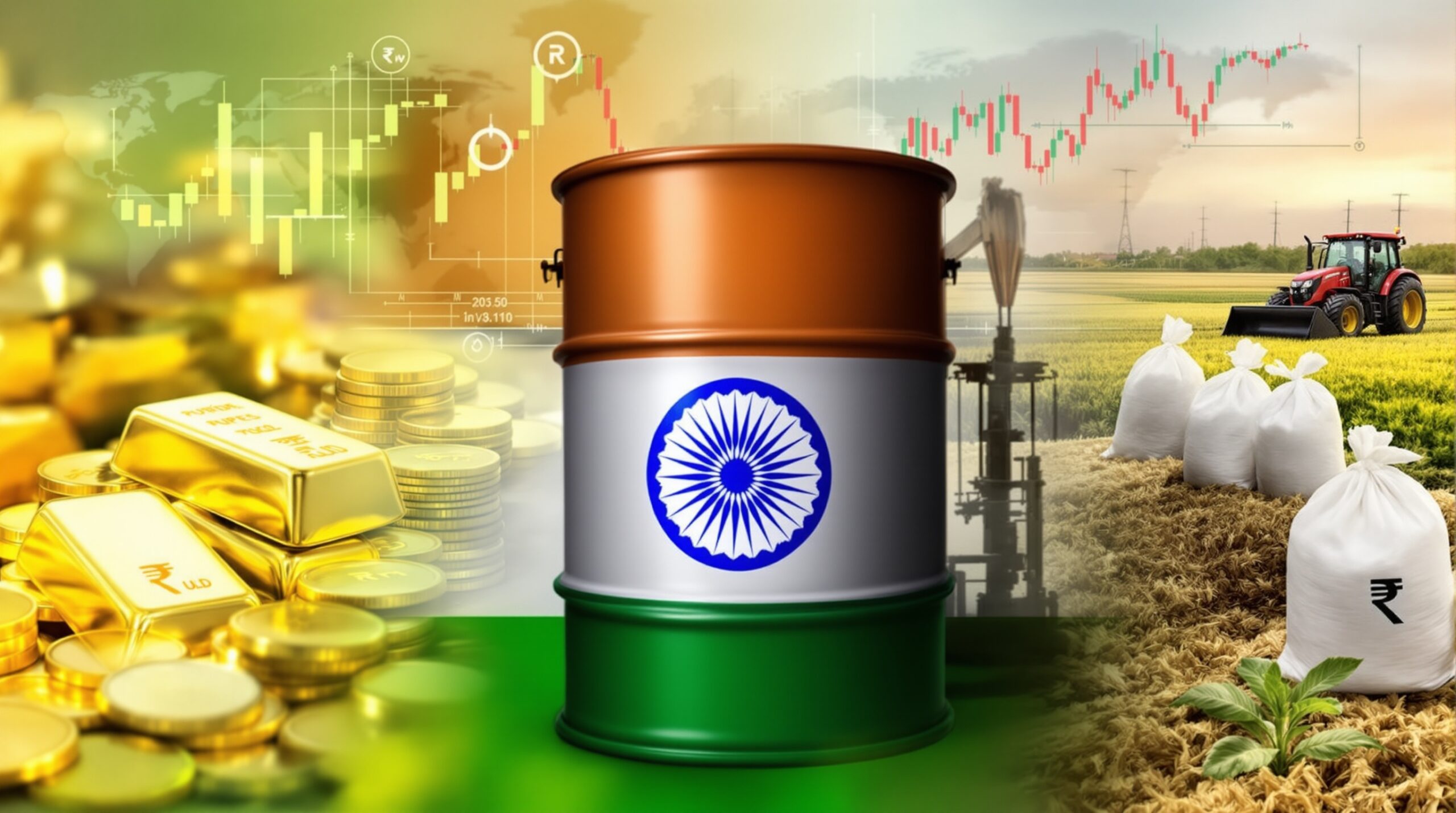
The commodities market in India experienced a dynamic week from August 29 to September 4, 2025, marked by volatility in precious metals, stability in energy prices amid geopolitical tensions, and positive momentum in the agricultural sector following key policy reforms.
Investors navigated uncertainties stemming from US tariffs on Indian exports, which targeted India’s reliance on Russian crude oil, alongside domestic GST reductions that boosted agri-related stocks. This roundup analyzes major trends, price movements, and implications for the Indian economy, drawing from reliable sources to provide actionable insights for traders and businesses in India.
As the world’s third-largest commodity consumer, India plays a pivotal role in global markets, and these developments underscore the interplay between international politics and local economic policies.
Gold and silver prices captured headlines with early gains driven by safe-haven demand, while crude oil held steady as the market assessed potential disruptions from tariffs. In agriculture, GST cuts on fertilizers and farm equipment sparked a rally in related stocks, signaling renewed optimism for rural economies. With the rupee fluctuating against the dollar and global demand concerns lingering, stakeholders monitored these shifts closely. This article breaks down each sector, offering a professional perspective to help Indian audiences make informed decisions.

Precious Metals: Gold and Silver Navigate Volatility
Precious metals dominated the commodities narrative this week, with gold and silver exhibiting sharp movements influenced by global uncertainties. Gold prices rallied to a three-week high on August 29, 2025, as MCX October futures climbed to Rs 1,02,226 per 10 grams.
Investors flocked to gold as a safe-haven asset amid a weakening dollar index, escalating US trade tariffs, and ongoing geopolitical tensions, including the Russia-Ukraine conflict. This surge reflected broader market anxiety, with experts attributing the uptick to profit-taking in the dollar and heightened demand for bullion.
Silver followed suit, hitting a new peak above Rs 1,17,117 per kg on the same day, marking its first close above Rs 1,17,000 per kg. The white metal’s rally, reaching a five-week high in global markets, stemmed from similar factors: industrial demand combined with safe-haven buying.
On the Multi Commodity Exchange (MCX), silver contracts for September delivery saw minor dips earlier in the week, decreasing by Rs 144 or 0.12% to Rs 1,17,030 per kg on August 29, but rebounded strongly. Analysts like Manoj Kumar Jain from Prithvifinmart Commodity Research advised buying silver on dips around Rs 1,16,500-1,16,000, with targets up to Rs 1,18,800, citing expected volatility from currency fluctuations and peace deal updates.
However, the momentum shifted by September 4, 2025, when gold rates fell over 1% in morning trade on the MCX, driven by increased risk appetite following GST reforms that enhanced investor confidence in equities. This pullback highlighted the sector’s sensitivity to domestic policy changes. Rahul Kalantri from Mehta Equities noted that gold and silver advanced overall amid dollar profit-taking, but warned of resistance levels: gold at Rs 1,02,800-1,03,200 and silver at Rs 1,18,000-1,18,500.
For Indian investors, these movements present opportunities but also risks. External links for further reading include the Economic Times report on gold and silver peaks, which provides detailed charts and expert quotes. Overall, precious metals added resilience to portfolios this week, but traders should watch US Federal Reserve signals and rupee dynamics for the coming days.

Energy Sector: Crude Oil Prices Hold Steady Amid Tariff Threats
The energy commodities market remained relatively stable this week, with crude oil prices showing minimal fluctuations as traders awaited the full impact of US tariffs on India. Brent crude futures edged up by just 2 cents to $67.24 per barrel, while West Texas Intermediate (WTI) stayed flat at $63.25 per barrel by mid-week. Despite a 2% drop on Tuesday after an initial two-week high, prices were poised for a weekly gain—Brent up 0.6% and WTI up 0.8%—bolstered by Ukrainian attacks on Russian refineries that prompted Russia to increase crude exports by 200,000 barrels per day in August.
A major overhang was the US imposition of an additional 25% tariff on Indian exports, effective August 27, 2025, bringing the total to 50%—one of Washington’s highest levies. This move targeted India’s 36% reliance on Russian crude imports, amounting to about 1 million barrels per day, as a response to Western sanctions post-Russia’s Ukraine invasion. Indian refiners initially curbed purchases but resumed for September and October through state-owned entities like Indian Oil and Bharat Petroleum.
CLSA issued a stark warning: If India halts Russian imports, global crude prices could surge to $90-$100 per barrel, stranding 1% of world supply and fueling inflation in oil-importing nations. The brokerage estimated India’s net annual benefit from discounted Russian crude at $2.5 billion (0.06% of GDP), with discounts narrowing to $1.5 per barrel recently. Commerce Minister Piyush Goyal addressed these concerns, emphasizing India’s small global export share and urging conglomerates to buy from domestic exporters to diversify markets.
Zinc, another energy-related metal, traded unchanged at Rs 274.75 per kg on September 3, reflecting subdued industrial demand. For deeper analysis, refer to the Economic Times article on oil tariffs. Indian stakeholders, particularly in transportation and manufacturing, should prepare for potential price hikes, as the government negotiates with 50 nations for market diversification.
Agricultural Commodities: GST Cuts Ignite Sector Rally
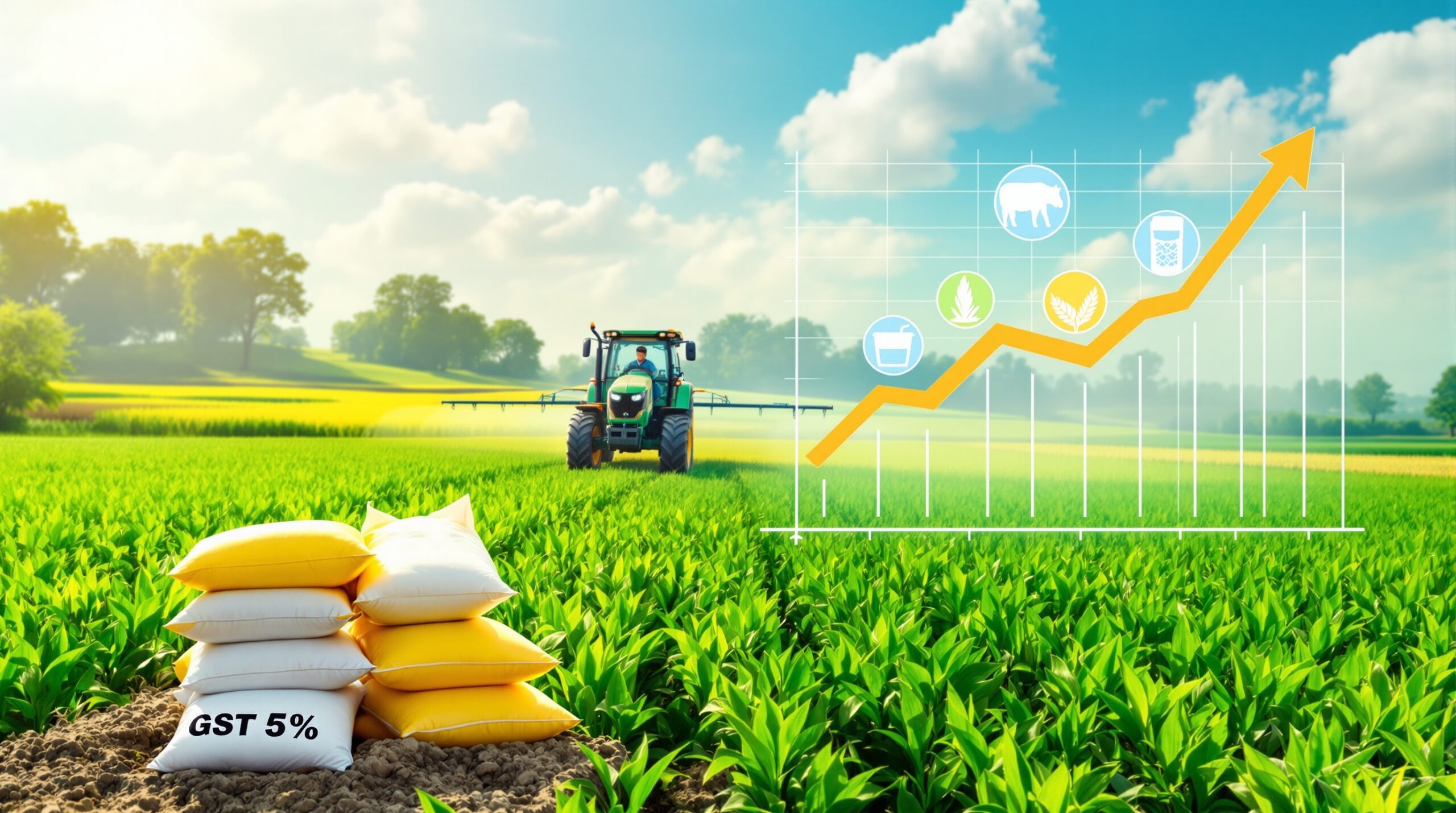
Agricultural commodities shone brightly this week, propelled by the GST Council’s decision to slash rates on fertilizers, farm equipment, and other inputs, which lowered cultivation costs and boosted market sentiment. Agri and dairy stocks rallied up to 7%, with Parag Milk Foods, Dodla Dairy, and Kaveri Seeds leading the charge. This reform directly addressed farmer concerns, potentially increasing productivity in key crops like pulses, rice, and dairy products.
NITI Aayog proposed introducing herbicide-tolerant varieties of pulses and their inclusion in the Public Distribution System (PDS), aiming to enhance yield and food security. Meanwhile, India aggressively pursued rice export opportunities in the Philippines, the world’s largest importer, to capitalize on surplus production. Commerce Minister Piyush Goyal highlighted potential trade swaps with Africa, where India could supply cars and milk products in exchange for gold, diamonds, and agri goods, fostering bilateral ties.
The National Commodity and Derivatives Exchange (NCDEX) raised $87.99 million from global and domestic investors, positioning itself for an equity foray and strengthening agri trading infrastructure. While specific price data for crops like wheat or sugar remained stable, the sector’s overall uplift benefited rural economies amid monsoon progress.
For more on GST impacts, check the Economic Times coverage on agri stock rallies. These developments empower Indian farmers and exporters, aligning with government goals for agricultural self-sufficiency.
Other Notable Developments in the Commodities Landscape
Beyond core sectors, the National Stock Exchange (NSE) revised quantity freeze limits for derivative contracts effective September 2025 and conducted mock trading sessions across equity, commodity, and currency segments on August 30. These measures enhance market efficiency and liquidity for commodity traders.
Global factors, including US tariffs projected to hit India’s economy by $55-60 billion according to Jefferies’ Chris Wood, added pressure, but India’s resilient import strategies mitigated immediate shocks. Stock market indices like Nifty and Sensex reflected this caution, with Nifty near 24,400 and Sensex below 80,000 on August 29.
Outlook and Investor Advice for Indian Markets
Looking ahead, commodities traders in India should brace for continued volatility. Precious metals may see support from global uncertainties, but GST-driven equity shifts could divert funds. Oil faces upside risks from tariff escalations, while agriculture benefits from policy tailwinds. Experts recommend diversified portfolios, with buys on dips for silver and cautious monitoring of Russian oil flows.
Consult resources like Moneycontrol’s trade setup for daily updates. Always conduct due diligence to align with personal risk profiles.
Conclusion
This week’s commodities market in India blended challenges and opportunities, from tariff-induced oil tensions to GST-fueled agri optimism. As September progresses, stakeholders must stay vigilant to capitalize on trends. By focusing on sustainable strategies, India can navigate global headwinds and strengthen its commodity ecosystem.