

How to Start Trading in the Indian Stock Market in 2025: A Beginner’s Guide Amid Rising Investor Interest
How to Start Trading in the Indian Stock Market
Introduction
In 2025, the Indian stock market continues to buzz with excitement as retail investor participation surges, driven by digital platforms and economic growth. The National Stock Exchange (NSE) and Bombay Stock Exchange (BSE) have seen record highs, with the Sensex crossing 90,000 and Nifty touching 27,000 earlier this year. If you’re an Indian resident looking to dive into personal finance through stock trading, now is an opportune time. However, starting without proper knowledge can lead to pitfalls.
Understand the Basics of the Indian Stock Market
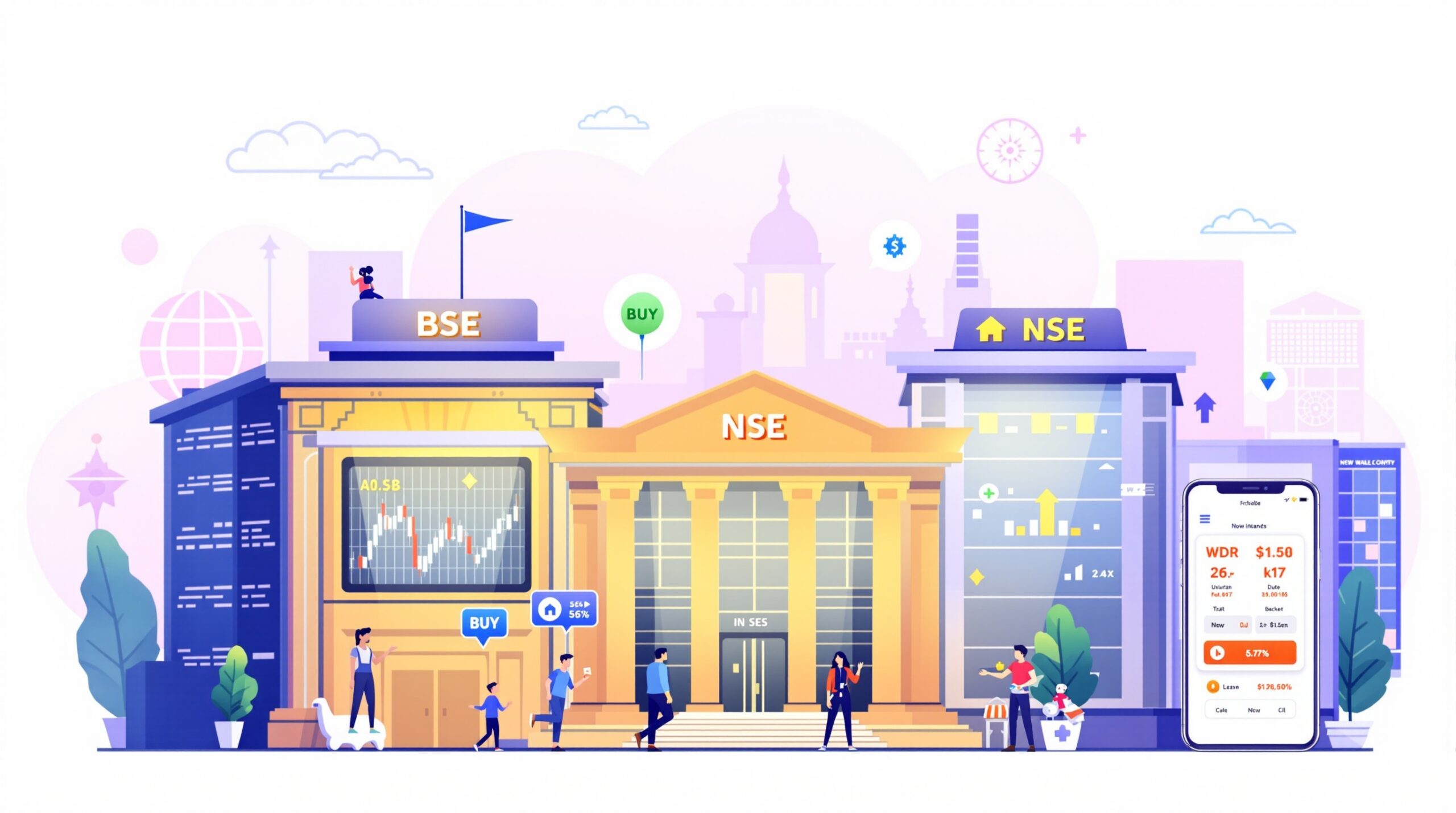
You must grasp the fundamentals before placing your first trade. The Indian stock market operates through two primary exchanges: the NSE and BSE. These platforms facilitate buying and selling of shares, bonds, and derivatives. In 2025, with advancements in AI-driven trading tools and mobile apps, accessibility has improved dramatically.
Stocks represent ownership in a company. When you buy shares, you become a partial owner, entitled to dividends and voting rights in some cases. The market functions on supply and demand, where prices fluctuate based on company performance, economic news, and global events. For instance, recent government initiatives like the PLI scheme have boosted sectors like manufacturing and tech.
Key terms to know:
- Bull Market: Rising prices, ideal for buying.
- Bear Market: Falling prices, where short-selling might apply.
- IPO: Initial Public Offering, where companies list shares publicly.
Educate yourself via free resources. The NSE Academy offers online courses on market basics. Link: NSE India – Getting Started. This knowledge empowers you to make informed decisions and avoids common beginner mistakes.

Set Clear Financial Goals and Assess Your Risk Tolerance
You define your objectives early to stay focused. Are you trading for short-term gains, long-term wealth, or retirement planning? In personal finance, aligning trades with goals prevents impulsive decisions.
Assess your risk tolerance. Stocks can yield high returns— the average annual return for Nifty 50 over the past decade hovers around 12-15%—but losses are possible. Use tools like risk assessment quizzes on platforms such as Groww or Zerodha.
Budget wisely. Start with disposable income; experts recommend not investing more than 10-15% of your savings initially. Factors like brokerage fees and taxes impact your capital needs. For example, transaction costs have dropped in 2025 due to competitive broking, but STT (Securities Transaction Tax) remains at 0.1% for delivery trades.
Link: Minimum Investment in Stock Market – HDFC Sky. This step ensures sustainable trading without financial strain.
Open a Demat and Trading Account
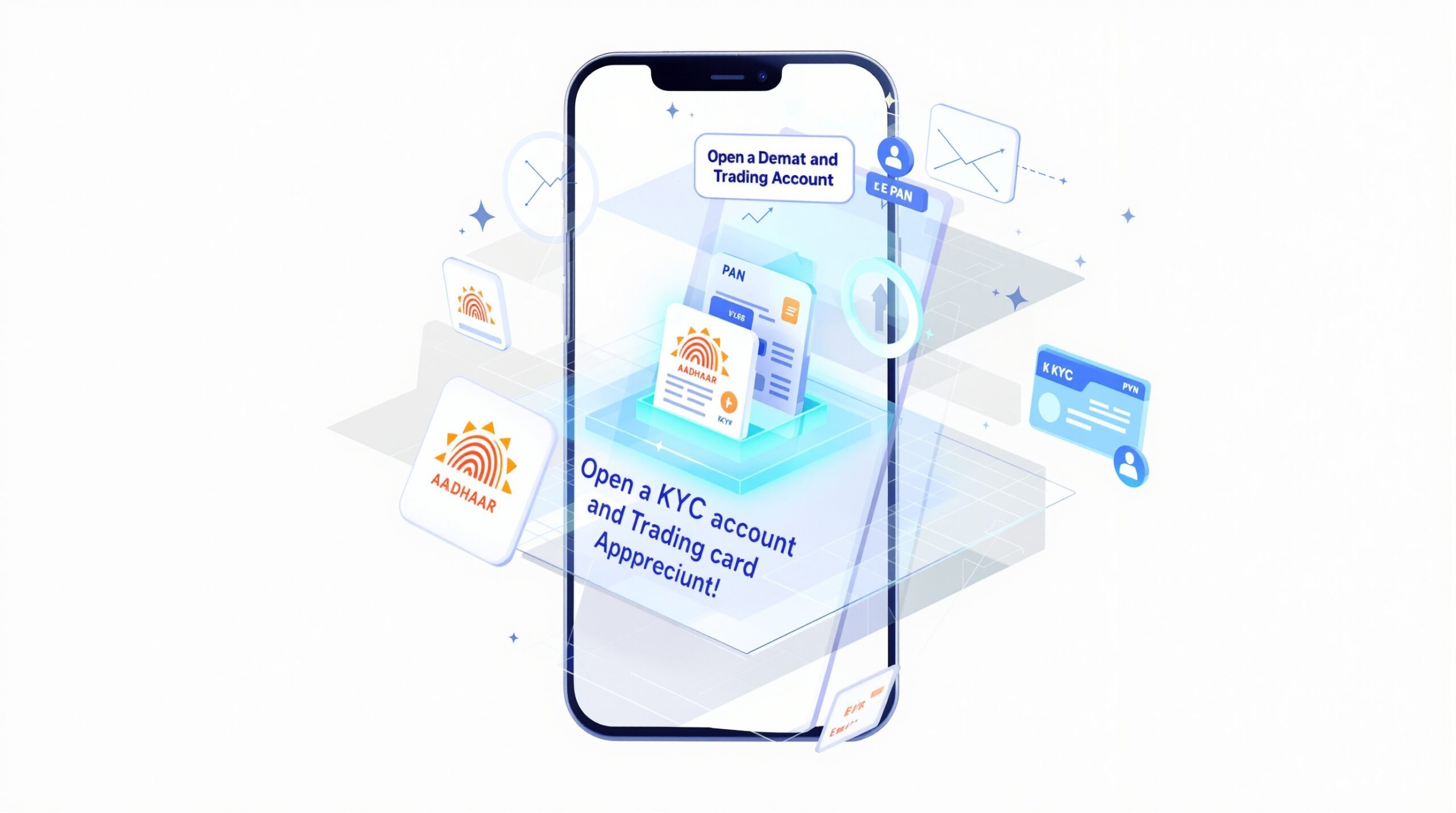
You open a Demat (Dematerialized) account to hold shares electronically and a trading account to execute buys and sells. This is mandatory under SEBI regulations.
Choose a SEBI-registered broker. Popular options in 2025 include Zerodha, Upstox, Angel One, and Kotak Securities, known for low fees and user-friendly apps. Compare platforms based on charges—Zerodha offers zero delivery brokerage, while others provide research tools.
Steps to open:
- Visit the broker’s website or app.
- Submit KYC documents: PAN card, Aadhaar, bank proof.
- Link your bank account for fund transfers.
- Verify via e-sign or video KYC.
The process takes 15-30 minutes online. Once approved, fund your account via UPI or net banking. For NRIs, use NRE/NRO accounts with PIS (Portfolio Investment Scheme) approval.
Link: How to Trade Stocks for Beginners – Kotak Securities. This setup is your gateway to the market.

Learn About Stock Selection and Research
You research stocks thoroughly to avoid blind investments. Use fundamental analysis (company financials, ratios like P/E) and technical analysis (charts, indicators like RSI).
Tools for research:
- Screener.in or TickerTape for stock screening.
- Yahoo Finance or Moneycontrol for real-time data.
In 2025, focus on trending sectors: EVs, renewables, and fintech. For example, companies like Tata Motors have gained from EV policies. Diversify across 5-10 stocks to mitigate risks.
Read annual reports and news. SEBI mandates disclosures, ensuring transparency. Avoid penny stocks initially; opt for blue-chip like Reliance or HDFC.
Link: Stock Market Basics – Angel One. Consistent research builds expertise.
Understand Trading Types and Strategies
You choose between intraday (same-day trades) and delivery (long-term holding). Beginners often start with delivery to learn without time pressure.
Strategies:
- Value Investing: Buy undervalued stocks, hold long-term (e.g., Warren Buffett style).
- Momentum Trading: Ride trending stocks.
- SIP in Stocks: Systematic Investment Plan via mutual funds or direct equities.
Use stop-loss orders to limit losses. In 2025, algo-trading via platforms like Tradetron automates strategies, but master manual trading first.
Link: Stock Trading Tips for Beginners 2025 – Tradetron. Tailor strategies to your goals.
Execute Your First Trade
You place orders once set up. Log into your trading app, search for a stock (e.g., ITC), check quotes, and buy/sell.
Order types:
- Market Order: Executes at current price.
- Limit Order: Specifies price.
Monitor via watchlists. In 2025, apps like 5paisa offer seamless execution with AI alerts.
Start small—invest ₹5,000-10,000 initially. Track performance and adjust.
Link: How to Start Online Trading – 5paisa. Practice on demo accounts if available.
Manage Risks and Stay Compliant
You prioritize risk management. Diversify, set stop-losses, and avoid leverage initially. Understand taxes: LTCG over ₹1.25 lakh taxed at 12.5% in 2025.
Comply with SEBI rules—report trades, avoid insider trading. Use investor protection funds if issues arise.
Emotional control is key; don’t chase losses. Join communities like Reddit’s r/IndianStreetBets for tips, but verify advice.
Link: How to Learn Stock Market Trading – Sharekhan. Vigilance ensures long-term success.
Leverage Technology and Education in 2025
You embrace tech for efficiency. Apps like Groww integrate AI for predictions, while NSE’s e-learning portal updates on regulations.
Enroll in courses: EQSIS offers beginner programs with mentoring.
Link: How to Start Trading in 2025 – EQSIS. Continuous learning adapts to market changes.
Common Mistakes to Avoid
You steer clear of errors like overtrading, ignoring fees, or following unverified tips. Always verify sources and start slow.
Conclusion
Starting trading in the Indian stock market in 2025 empowers your personal finance journey. By opening accounts, researching, and managing risks, you position yourself for growth. Remember, patience yields results—many successful traders started small. Consult professionals and stay updated via SEBI and NSE.
For more, explore: How to Start Investing in Stocks 2025 – Trading Bells.
FAQs
What is the minimum amount to start trading?
You can begin with as little as ₹500-1,000, depending on stock prices and broker minimums.
Do I need a PAN card?
Yes, PAN is mandatory for KYC.
Is trading safe in India?
Regulated by SEBI, it’s safe if you follow guidelines and use registered brokers.