

Forex News Today: Indian Rupee Weakens Amid Surging Dollar Demand from Oil Importers – Key Updates and Analysis (August 21, 2025)
Indian Rupee Weakens Amid Surging Dollar Demand
Introduction
Forex markets pulse with activity on August 21, 2025, as traders navigate a mix of domestic and global influences. The Indian Rupee experiences volatility, starting the day on a strong note but closing weaker against the US Dollar.
This article delves into today’s key developments in the foreign exchange arena, with a special focus on how these shifts affect Indian investors, exporters, and importers.
We analyze major currency pairs, economic indicators, and upcoming events that could shape the market trajectory.
Drawing from real-time data and expert insights, this comprehensive news piece equips you with actionable information to make informed decisions.
Indian Rupee’s Performance: A Day of Ups and Downs
The Indian Rupee kicks off the trading session with gains but succumbs to pressure by the close.
It appreciates 14 paise to reach 86.93 against the US Dollar in early trade, buoyed by positive domestic equities and upbeat
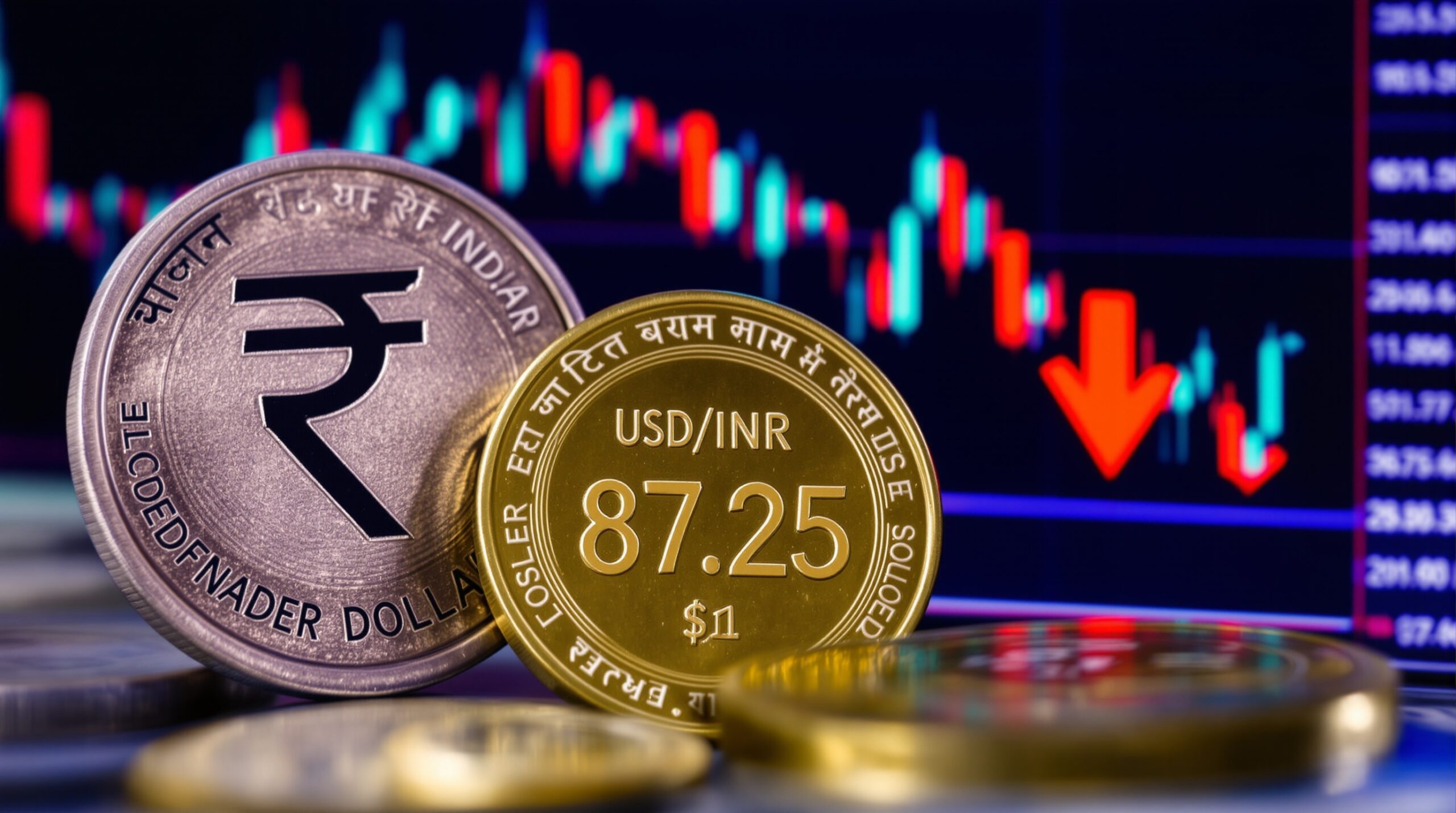
Purchasing Managers’ Index (PMI) data. However, aggressive dollar buying by oil importers reverses this momentum, causing the Rupee to fall 18 paise and settle at 87.25. This decline highlights the Rupee’s sensitivity to oil price fluctuations, as India imports over 80% of its crude oil needs.
Analysts attribute the late-session slip to heightened demand for the greenback from state-run oil companies.
At the interbank foreign exchange market, the Rupee opens at 87.04 but faces resistance amid broader dollar strength. Historical data shows the USD/INR pair hovering around 87.2675 today, marking a slight uptick from yesterday’s 87.1666. This movement aligns with the Reserve Bank of India’s (RBI) interventions to curb excessive volatility, yet external pressures persist.
For Indian businesses, this Rupee depreciation means higher import costs, particularly for energy and commodities. Exporters, on the other hand, gain a competitive edge as their goods become cheaper in international markets.
Traders should monitor the RBI’s forex reserves, which stand robust at over $600 billion, providing a buffer against sharp declines.

Major Currency Pairs: USD/INR, EUR/INR, and GBP/INR in Focus
Today’s forex spotlight shines on key pairs involving the Indian Rupee. The USD/INR pair dominates headlines, with the Dollar’s recovery exerting downward pressure on emerging currencies like the INR.
Experts note that the US Federal Reserve’s hawkish minutes from the latest FOMC meeting contribute to this strength, signaling concerns over inflation risks. As a result, the Dollar index edges higher, impacting pairs across Asia.
Shifting to EUR/INR, the Euro trades at approximately 101.4305 against the Rupee, reflecting a minor dip. European economic data, including upcoming PMI readings, influences this pair.
The EUR/USD analysis indicates stability ahead of key indicators, with the pair holding above 1.16. For Indian travelers and importers dealing with Eurozone goods, this translates to relatively stable costs, though any Euro weakness could offer savings.
The GBP/INR pair also sees moderate activity, with the Pound influenced by UK public sector borrowing data released today at 1.1B, below expectations. This softer-than-anticipated figure supports a neutral to bullish outlook for GBP/USD, indirectly benefiting GBP/INR.
Indian students and professionals in the UK might find remittances slightly more favorable if the Pound strengthens further.
Other notable pairs include USD/JPY and AUD/INR, where global risk sentiment plays a role. The broader forex landscape shows the Dollar’s dominance, with emerging market currencies like the INR facing headwinds from tariff tensions and geopolitical risks.

Global Influences Shaping Forex Markets
Several international factors drive today’s forex dynamics, particularly those resonating with Indian markets. The FOMC minutes reveal a hawkish stance, rattling equities and bolstering the Dollar.
This development comes as markets eye Walmart’s Q2 earnings and UK GDP figures, which could sway investor confidence.
In India, upbeat PMI data lifts sentiment temporarily, pushing the Rupee to a 2-day high earlier in the session.
The HSBC Flash India Composite PMI rises to 60.7 in August, indicating robust expansion in manufacturing and services sectors. This positive economic signal underscores India’s resilience amid global uncertainties, potentially attracting foreign inflows.
Oil prices remain a critical wildcard. Brent crude hovers around $70 per barrel, prompting dollar purchases by importers and weighing on the Rupee. Geopolitical tensions in the Middle East could exacerbate this, as any supply disruptions would amplify India’s import bill.
Looking ahead, the Jackson Hole Economic Symposium, starting later this week, grabs attention. Federal Reserve Chair Jerome Powell’s speech might hint at rate cut timelines, influencing global yields and currency flows. For India, softer US rates could ease pressure on the Rupee by reducing capital outflows.
Commodity-linked currencies also intersect with forex trends. Gold prices in India fall today, with 1 gram at 9,341.17 INR, driven by Dollar strength. Silver follows suit, and experts predict further dips if support levels break. Indian jewelers and investors should watch these correlations, as gold often serves as a hedge against Rupee volatility.
Economic Calendar Highlights for Today
Today’s economic releases provide crucial context for forex movements. Key events include:
- Switzerland Trade Balance: Actual 4.59B, below forecast, impacting CHF pairs marginally.
- UK Public Sector Net Borrowing: 1.1B, signaling fiscal discipline and supporting GBP.
- Eurozone PMI Data: Upcoming releases could sway EUR/INR, with manufacturing PMI expected at 45.8.
- US Existing Home Sales: Later today, potentially reinforcing Dollar strength if robust.
Indian traders benefit from aligning strategies with these indicators. For instance, strong Eurozone PMI might bolster EUR/INR, offering diversification opportunities.
Impacts on Indian Economy and Traders
These forex shifts carry direct implications for India’s economy.
A weaker Rupee inflates import costs, contributing to inflationary pressures amid rising food prices. The government and RBI actively manage this through interventions and policy tweaks, aiming for a stable 4-6% inflation target.
For retail forex traders in India, platforms like those regulated by SEBI offer tools to hedge risks.
Consider strategies like carry trades in high-yield pairs or options to protect against volatility. Exporters in IT, pharmaceuticals, and textiles rejoice at the Rupee’s dip, as it boosts earnings in Dollar terms.
Investors eye foreign institutional inflows, which dipped in August with FIIs selling Rs 21,000 crore worth of equities.
A reversal could strengthen the Rupee, especially if global risk appetite improves post-Jackson Hole.